How to Lower Bad Cholesterol (LDL) with Diet and Exercise
High cholesterol is often referred to as a “silent threat” because it damages your circulatory system without showing any external warning signs. Inside your blood vessels, an excess of Low-Density Lipoprotein (LDL)—commonly known as bad cholesterol—gradually deposits along the arterial walls. Over time, this buildup forms a hard, sticky substance called plaque, leading to clogged arteries, restricted blood flow, hypertension, and an increased risk of heart attacks.
The good news is that your lifestyle holds the ultimate key to reverse this condition. You do not have to rely solely on long-term medications to fix your profile. In this master guide, we will provide an actionable, science-backed blueprint on how to lower bad cholesterol ldl with diet and exercise using accessible, natural superfoods like whole oats, raw garlic, and strategic cardiovascular training routines. Read also: How to Improve Gut Health and Digestion Fast: Beat Bloating Naturally
The Biological Truth About Clogged Arteries and LDL
To fix your heart health, it helps to visualize what happens inside your cardiovascular system. Think of your blood vessels as clean, smooth highways. LDL cholesterol acts like slow-moving cargo trucks that occasionally spill debris on the road. If your body lacks enough High-Density Lipoprotein (Biologically known as HDL or good cholesterol) to clear this debris, the spilled fat oxidizes and triggers a protective inflammatory response, creating a calcified barrier that narrows the artery path.
When you actively make lifestyle changes to lower bad cholesterol, you are initiating a biological clean-up process. You slow down the accumulation of new arterial debris while giving your body the natural resources it needs to stabilize existing plaque formations, ensuring optimal blood flow to and from the heart.
Dietary Powerhouses: Cleaning Arteries with Oats and Garlic
1. Whole Grain Oats: The Internal Soluble Fiber Sponge
Oats are exceptionally rich in a unique compound called beta-glucan, a highly soluble form of dietary fiber. When beta-glucan enters your digestive tract, it transforms into a thick, gel-like substance that binds directly to cholesterol-rich bile acids in your small intestine. Instead of allowing this excess cholesterol to be reabsorbed into your bloodstream, the oat gel safely traps it and carries it out of your body as waste, forcing your liver to draw existing LDL out of your blood to create new bile.
2. Raw Garlic: The Natural Allicin Enzyme Booster
Garlic contains a highly potent bioactive sulfur compound called allicin, which is activated when raw cloves are crushed, chopped, or chewed. Allicin works by directly inhibiting HMG-CoA reductase—the exact liver enzyme responsible for manufacturing cholesterol inside your body. Additionally, regular garlic consumption keeps your blood vessels flexible, thins the blood slightly to prevent dangerous clots, and reduces the oxidation rate of systemic LDL cholesterol.
Exercise Strategies: Revving Up Cardio for Lipid Optimization
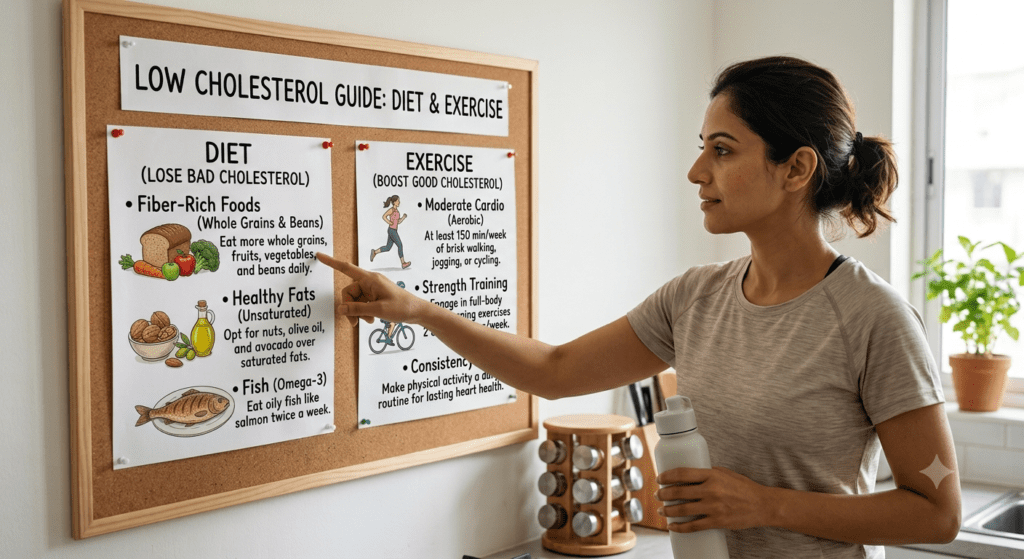
Diet alone is only half the battle; physical movement acts as the biological engine that optimizes your lipid metabolism. While a healthy diet reduces the influx of new bad cholesterol, targeted physical exercise increases the production of good HDL cholesterol, which acts as a cellular vacuum cleaner to remove plaque components from your arterial walls.
Moderate-Intensity Steady State Cardio (MISS): Engaging in 30 to 45 minutes of brisk walking, cycling, or swimming five days a week stimulates metabolic enzymes that transport LDL from the bloodstream to the liver for excretion.
High-Intensity Interval Training (HIIT): Short bursts of intense cardio followed by brief recovery periods have been shown to maximize cardiovascular endurance, reduce visceral fat, and accelerate arterial clearing.
Consistency is Key: It takes roughly 4 to 6 weeks of regular aerobic exercise to trigger permanent, positive adaptations in your overall cholesterol profile.
10 Frequently Asked Questions (FAQs)
1. How long does it take to lower bad cholesterol (LDL) with diet and exercise?
With strict adherence to a heart-healthy diet rich in oats and garlic, alongside regular cardio exercise, you can see measurable reductions in your circulating LDL cholesterol levels in 4 to 8 weeks.
2. Does cooking garlic reduce its cholesterol-lowering benefits?
Yes, high heat destroys allicin. To maximize benefits, crush raw garlic and let it sit for 10 minutes before consuming it raw, or add it to cooked dishes at the very end of the cooking process.
3. Can instant oatmeal lower cholesterol as effectively as steel-cut oats?
Steel-cut and rolled oats are best because they are less processed and keep you full longer. Instant oatmeal often contains added sugars, which can raise triglycerides and diminish heart health benefits.
4. Is walking alone enough cardio exercise to lower my bad LDL levels?
Yes, brisk walking is an excellent form of moderate-intensity cardio. The key is maintaining a pace where your heart rate is elevated, and staying consistent for at least 150 minutes per week.
5. Are eggs entirely bad for individuals with high LDL cholesterol?
For most people, dietary cholesterol in egg yolks has a minor impact on blood cholesterol compared to saturated and trans fats. However, moderation (1 egg per day) is recommended if you have existing heart disease.
6. Can drinking green tea help clear out clogged blood vessels?
Green tea contains powerful antioxidants called catechins. Studies suggest catechins help prevent the oxidation of LDL cholesterol, making it less likely to form dangerous plaque inside your arteries.
7. What fats should I replace saturated cooking oils with?
Replace saturated fats like butter and ghee with monounsaturated fats such as extra virgin olive oil, avocado oil, or cold-pressed mustard oil, which protect your good HDL levels.
8. How exactly does good HDL cholesterol protect my heart?
HDL acts as a scavenger in your blood. It binds to excess circulating LDL molecules, yanks them out of arterial walls, and transports them back to the liver to be broken down and expelled safely.
9. Can emotional stress increase my bad cholesterol metrics?
Yes. Chronic stress triggers the release of cortisol and adrenaline. These metabolic hormones stimulate the production of triglycerides and bad LDL cholesterol while narrowing blood pathways.
10. Should I immediately stop my prescribed statins if my diet improves?
Never stop taking prescribed cardiovascular medication without consulting your doctor. Use your diet and exercise routine to complement your medical plan until your physician adjusts your dosage.
Conclusion
Taking control of your lipid health is entirely achievable when you understand how to lower bad cholesterol ldl with diet and exercise. By integrating soluble fiber-rich oats into your morning routine, adding raw crushed garlic to your diet, and committing to a sustainable weekly schedule of cardiovascular training, you provide your body with the perfect natural tools to clean out clogged arteries and optimize blood circulation. Your heart health is built on daily habits—start implementing these small, high-impact changes today to enjoy a strong, disease-free circulatory system.
For more authoritative, peer-reviewed scientific studies regarding cardiovascular wellness and managing arterial blockages naturally, read the official resources available on the American Heart Association (AHA) website.
Medical Disclaimer
The health information published on wellthline.com is structured for peer-to-peer educational clarity and reference purposes only. It must never replace individual medical counsel, diagnosis, or personalized therapeutics provided by a board-certified cardiologist or healthcare physician.







1 thought on “How to Lower Bad Cholesterol (LDL) with Diet and Exercise Naturally”