The Science of sleep health benefits: Understanding Your Architecture
Your body does not simply turn off when you close your eyes. Instead, your brain cycles through two distinct types of sleep: Non-Rapid Eye Movement (NREM) and Rapid Eye Movement (REM) sleep. A single healthy cycle takes roughly 90 to 110 minutes, repeating 4 to 6 times a night. Read Also: 7 Proven Natural Remedies for Chronic Stress: Calm Your Nervous System Safely
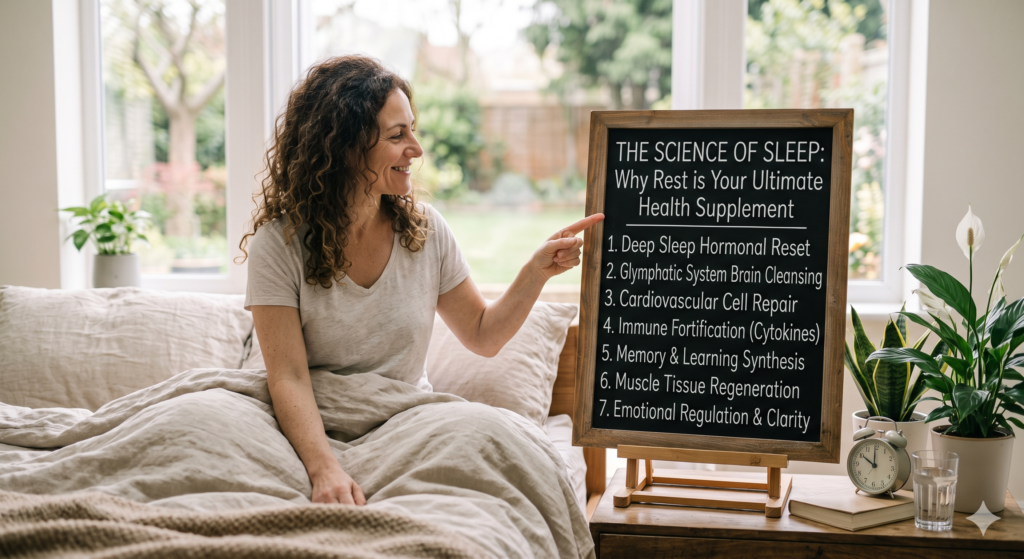
One of the most groundbreaking neurological discoveries of recent years is the glymphatic system. Think of it as your brain’s internal waste management network. During NREM Stage 3 (deep slow-wave sleep), your brain cells physically shrink by roughly 60%. This space allows cerebrospinal fluid (CSF) to rush through the tissue like a biological dishwasher, flushing out metabolic debris, including beta-amyloid plaques—the toxic proteins directly linked to Alzheimer’s disease. Without adequate deep sleep, these toxins accumulate day after day.
4 Systemic Benefits of Prioritizing Sleep
1. Hormonal Optimization and Weight Regulation
Sleep is a massive regulator of your endocrine system. If you struggle with stubborn weight gain or uncontrollable cravings, the root cause might be your bedroom habits rather than your kitchen choices.
Leptin and Ghrelin: Sleep deprivation directly alters your hunger hormones. It reduces leptin (the hormone that tells your brain you are full) and spikes ghrelin (the hormone that triggers hunger).
Insulin Sensitivity: Missing just a few nights of quality rest can make your cells highly resistant to insulin, mimicking the metabolic markers of pre-diabetes. Your body struggles to clear glucose from the bloodstream, storing it as fat instead.
2. Cardiovascular Rejuvenation
During deep sleep, your body enters a natural state of rest called “nocturnal dipping.” Your blood pressure drops by 10% to 20%, giving your heart, arteries, and blood vessels a crucial break. Failing to reach this stage keeps your sympathetic nervous system activated, leading to arterial stiffness and drastically increasing the long-term risk of hypertension and stroke.
3. Accelerated Muscle Repair and Tissue Growth
For athletes and fitness enthusiasts, sleep is where muscle growth actually happens. The vast majority of Human Growth Hormone (HGH) is pulsed into the bloodstream during deep slow-wave sleep. HGH is essential for tissue repair, cellular reproduction, and protein synthesis. Skipping sleep effectively stunts your body’s ability to recover from physical exercise.
4. Immune System Fortification
While you rest, your immune system releases proteins called cytokines, some of which help promote sleep and fight off infections. Sleep deprivation suppresses the production of these protective cytokines and lowers the efficacy of your natural killer (NK) cells, leaving you highly vulnerable to common viruses and bacterial infections.
Essential Sleep Hygiene Tips
To transform your bedroom into a recovery sanctuary and unlock these clinical benefits, implement these three non-negotiable rules:
The 65°F (18°C) Temperature Rule: Your core body temperature needs to drop by about 2°F to initiate and sustain deep sleep. Keep your bedroom cool, dark, and quiet to assist this natural biological transition.
The Blackout Standard: Any ambient ambient light entering your eyes—even from an alarm clock or streetlamp—can halt the pineal gland’s production of melatonin (the sleep hormone). Use blackout curtains or a comfortable eye mask.
The Caffeine Curfew: Caffeine has a half-life of roughly 5 to 7 hours and a quarter-life of up to 12 hours. To preserve your deep sleep architecture, cut off all caffeine intake at least 10 hours before your target bedtime.
Frequently Asked Questions
1. Is it possible to “catch up” on missed sleep during the weekends?
No. Sleep debt is not a financial bank account. While sleeping extra on the weekend can briefly improve alertness, it cannot reverse the metabolic disruption, hormonal imbalances, or cellular inflammation caused by chronic sleep deprivation during the week.
2. How many hours of sleep do adults genuinely need?
The vast majority of clinical data shows that adults require between 7 and 9 hours of sleep per night to maintain optimal physical and cognitive health. Less than 6 hours consistently is correlated with long-term chronic disease.
3. What is the difference between sleep quantity and sleep quality?
Quantity is the number of hours your eyes are closed. Quality is determined by whether you seamlessly transition through all required NREM and REM cycles. You could be in bed for 9 hours, but if alcohol or light interrupts your deep stages, your sleep quality remains poor.
4. How does alcohol impact our sleep architecture?
While alcohol is a sedative that might help you fall asleep faster, it is a powerful disruptor of REM sleep. It fragments your sleep cycles, causes frequent micro-awakenings, and leaves you feeling exhausted the next morning.
5. Can looking at my phone before bed ruin my sleep?
Yes. Digital screens emit concentrated blue light, which mimics daylight. This fools your brain into thinking it is still daytime, suppressing melatonin secretion and delaying your sleep onset by hours.
6. What is the best natural supplement to improve sleep quality?
Magnesium Threonate or Bisglycinate is highly effective for relaxing the nervous system. While melatonin supplements can help with jet lag, they should not be relied upon long-term, as they can interfere with your body’s natural hormone production.
7. Why do I wake up feeling tired even after 8 hours of sleep?
This is often a sign of poor sleep quality, potentially caused by issues like sleep apnea (disrupted breathing), extreme stress, high bedroom temperatures, or eating a heavy, sugary meal too close to bedtime.
8. What is a circadian rhythm?
Your circadian rhythm is your body’s internal 24-hour biological clock. Managed by the brain’s suprachiasmatic nucleus, it responds directly to light exposure, dictating when you feel naturally alert or naturally sleepy.
9. Does tracking sleep with smartwatches help?
Smartwatches are great for tracking overall sleep duration and consistency. However, their ability to perfectly identify exact REM and deep sleep stages is less accurate than clinical sleep lab equipment. Use them as general guides rather than absolute truth.
10. How soon before bed should I stop eating?
You should finish your last major meal at least 2 to 3 hours before going to sleep. Digesting a heavy meal forces your body to direct blood flow and energy to your stomach, which raises your core body temperature and disrupts deep sleep stages.
Verified Medical Resources
To review peer-reviewed clinical studies and official data regarding sleep biology, read the public guidelines published by the American Academy of Sleep Medicine (AASM).
Disclaimer
The health and wellness insights provided in this article are intended strictly for educational and informational purposes. Sleep disorders like chronic insomnia or sleep apnea can be symptoms of complex underlying medical issues. Please consult a qualified medical professional or certified somnologist before making major adjustments to your sleep schedule or starting any new supplement regimen.







Tour website is very helpful for give me information about disease ☺️